THE SOVIET UNION
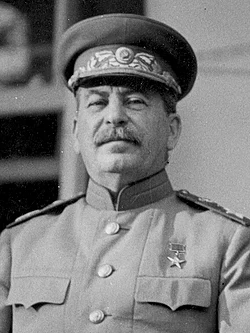
At the 1945 Yalta Conference, the Soviet Union held immense geopolitical leverage, largely because the Red Army had already pushed deep into Eastern Europe and was closing in on Berlin. Premier Joseph Stalin used this dominant military position to secure a strategic "buffer zone" of Soviet influence, arguing that a friendly Polish government was absolutely essential to safeguarding the USSR from future Western invasions. While Stalin compromised on paper by signing the Declaration on Liberated Europe—which promised free and democratic elections—his primary focus remained firmly on ensuring that the USSR would emerge from the war with its western borders protected and its superpower status cemented. In exchange for territorial concessions in Asia, Stalin also committed the Soviet Union to entering the war against Japan within three months of Germany's defeat, a crucial agreement that U.S. President Franklin D. Roosevelt sought to minimize American casualties in the Pacific.
Beyond territorial security, Stalin sought heavy financial reparations from Germany to rebuild the shattered Soviet infrastructure and economy, which had suffered catastrophic losses during the Nazi invasion. Although Winston Churchill pushed back against total Soviet domination of Eastern Europe, the Western Allies ultimately had to accept many of Stalin's demands to maintain the wartime alliance and ensure Soviet cooperation in the newly proposed United Nations. Ultimately, the Soviet Union's actions at Yalta reflected a calculated determination to reshape the post-war map to its own ideological and defensive advantage, effectively drawing the initial lines of the Iron Curtain and laying the groundwork for the decades of Cold War tension that followed.
Create Your Own Website With Webador